MTG’s next set, Secrets of Strixhaven is on the way, and we recently took part in a special preview to learn more about the set’s intricate mechanics. Similar to the previous Strixhaven set, each school will have its own important mechanic to be familiar with, as well as a new mechanic that’s going to feel familiar, in some ways. I loved the original Strixhaven, so I’m glad to be going back to this magical university, and see how it will connect to the next non-UB expansion, Reality Fracture.
If you want to know what the new mechanics and keywords will do in MTG Secrets of Strixhaven, don’t worry, I’m here to help! With many new, and one returning mechanic, there’s a lot to know, but it’s not going to be too complex. Here’s our study guide for Strixhaven.
MTG Secrets of Strixhaven’s new main mechanics: Prepare, Paradigm, Converge
Prepare is arguably the most important new mechanic in MTG Secrets of Strixhaven, and is one you’ll see all across the set, regardless of which school the card is from. You’ll find it on creatures, and it allows creatures to come equipped with a spell you can cast, after the creature is played. This is different from Adventure from the Throne of Eldraine set, because you had a choice to cast either the creature or spell version.
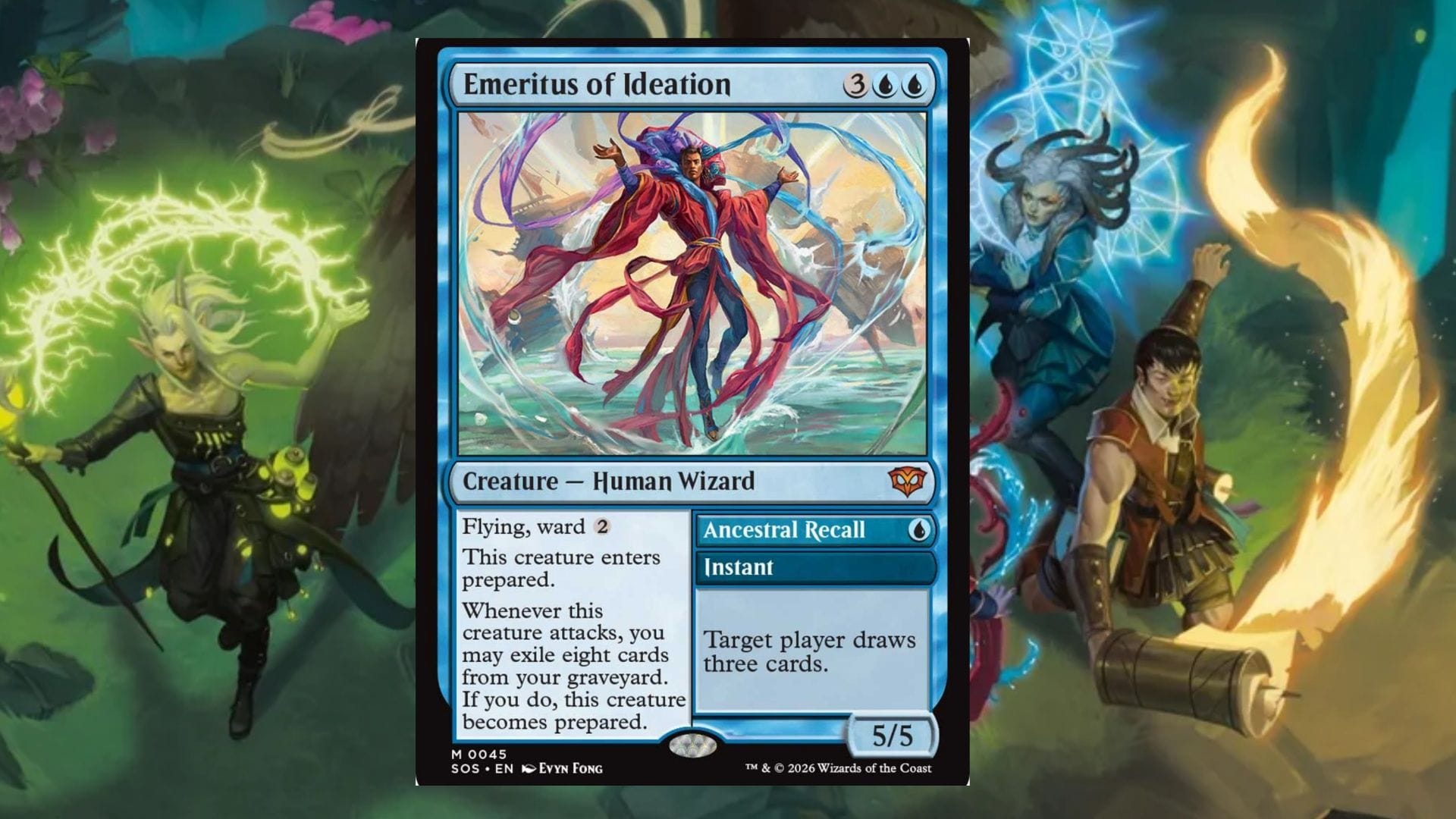
Creatures with Prepare will have their text box cut in half, with a spell on the right, and the creature’s text on the left. When a creature meets the requirements to become Prepared, you’ll be able to cast the spell on the right side. Many of these creatures come into play Prepared, but that won’t always be the case.
When you cast the spell, that creature becomes unprepared, but there are ways to prepare a creature again in MTG, don’t worry. A great example is Emeritus of Ideation, which comes into play prepared, and you can re-prepare it when you attack with it, if you exile eight cards from your graveyard. Your reward? The ability to cast Ancestral Recall, one of the Power Nine.
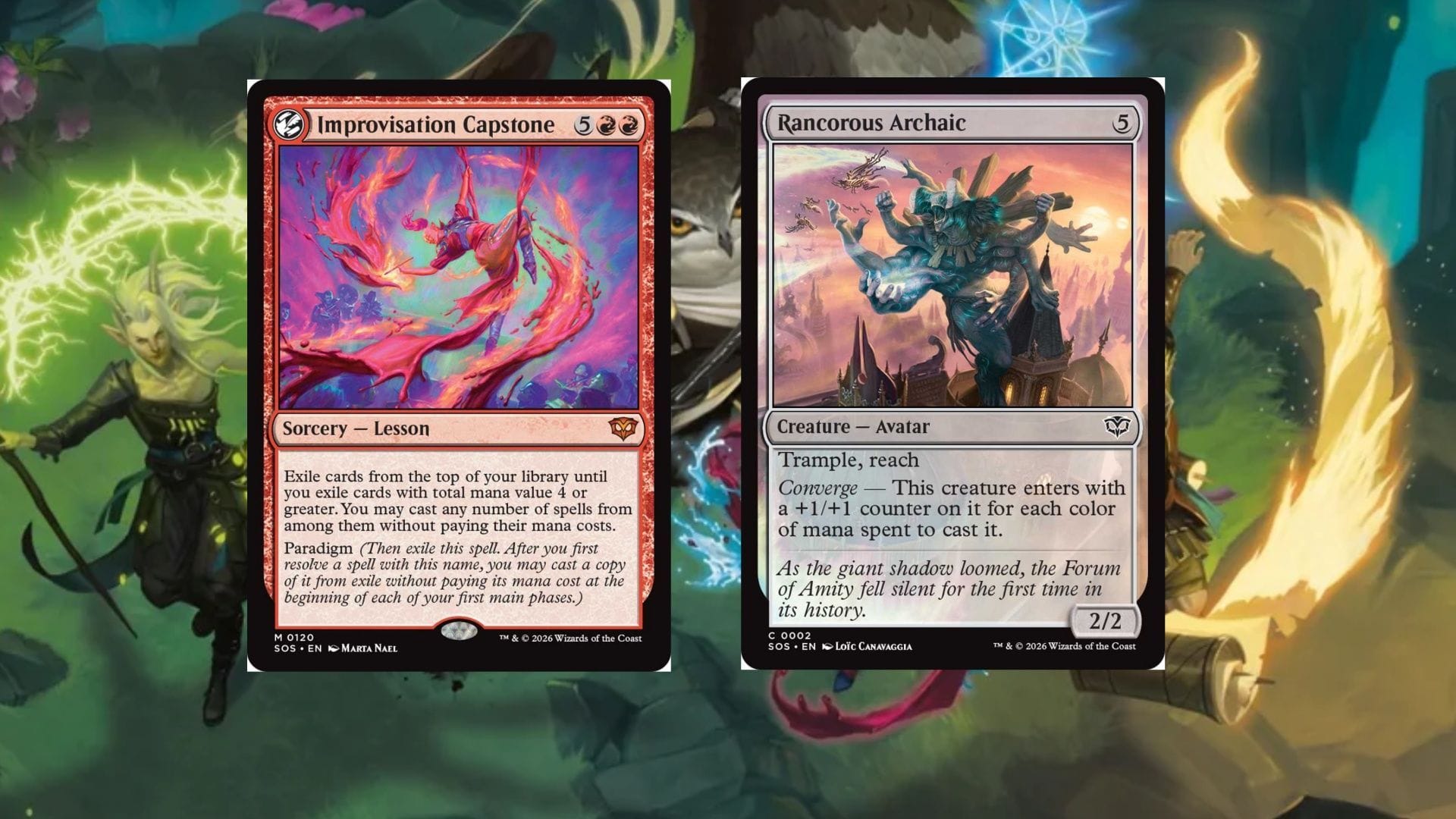
Paradigm is a smaller MTG Secrets of Strixhaven mechanic, and will appear on a set of sorceries in this expansion. Nonetheless, it packs a punch. When a spell with Paradign resolves, you exile it. Then, on each of your first main phases going forward, you may cast the spell again without paying its mana cost. It can be interacted with (countered), but nonetheless, you’ll still get access to that spell each turn, no matter what.
Improvisation Capstone is one of these spells. It allows you to Exile cards from the top of your library until you exile cards with a total mana value of 4 or more. You can then cast any number of these without paying their mana costs. As you can see, Paradigm can add a ton of value to your deck.
Converge is the final more universal new mechanic in MTG Secrets of Strixhaven. It’s not new, but it’s a powerful one. Simply put, Creatures with Converge enter with a +1/+1 counter for each color of mana spent on them. However, if you cast a creature like this for free, then no mana was spent on it, so it won’t gain any +1/+1 counters.
MTG Secrets of Strixhaven gives each school its own special mechanic
Each Strixhaven school of study will feature its own unique mechanic once again, and the ones in MTG Secrets of Strixhaven are pretty powerful, that’s for sure. While Loreholds is a literal flashback, the others are new, interesting mechanics that will be enjoyable to interact with.
- Repartee (Silverquill)
- Infusion (Witherbloom)
- Increment (Quandrix)
- Opus (Prismari)
- Flashback (Lorehold)
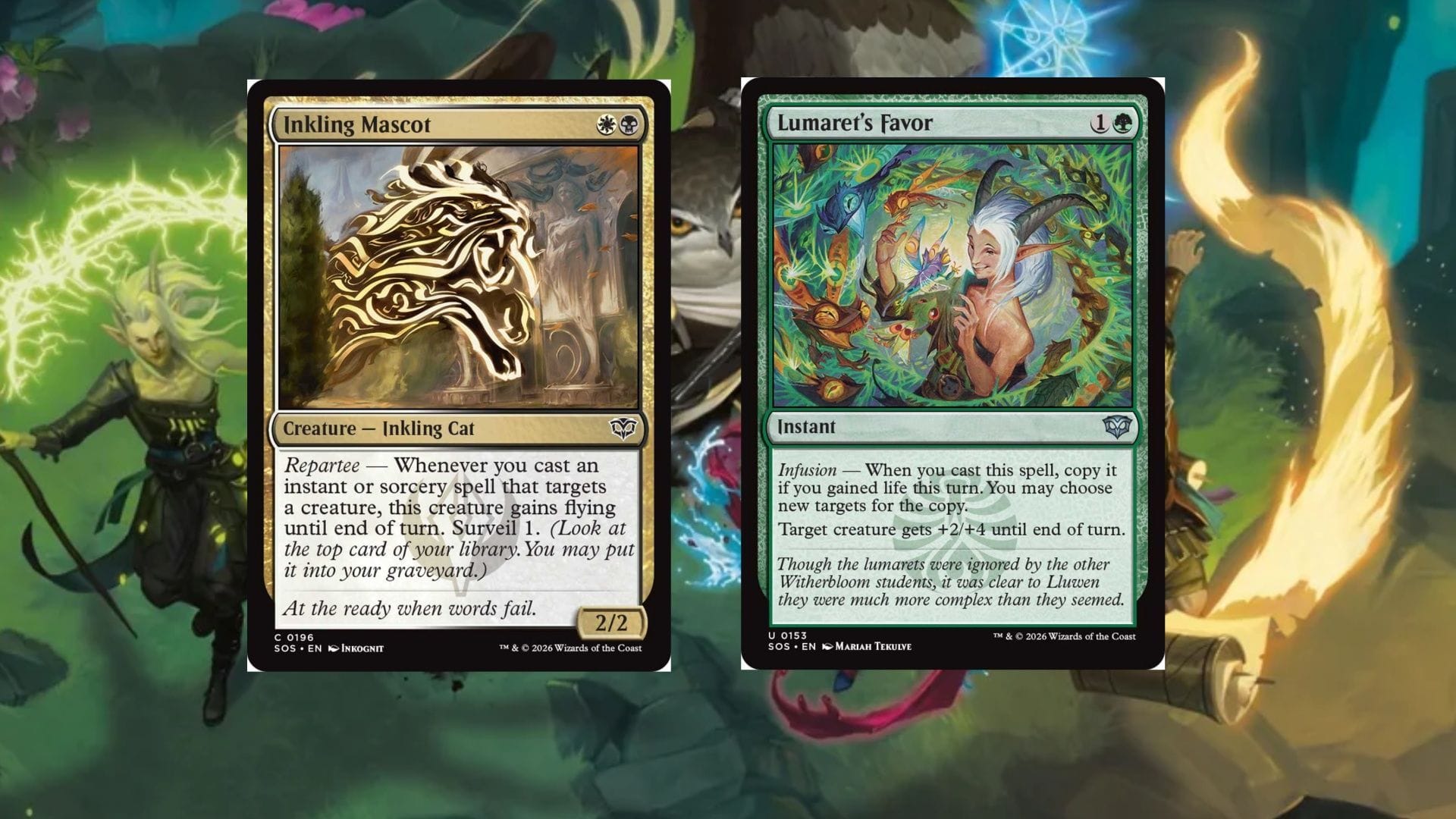
Repartee belongs to Silverquill, my personal favorite school in MTG Secrets of Strixhaven. Repartee focuses on triggered abilities, when you cast an instant or sorcery that targets a creature. For example, with Inkling Mascot, when you target a creature with an Instant or Sorcery, the Mascot gains Flying until end of turn, and you can Surveil 1.
Infusion will be on Witherbloom cards, and it’s built around gaining life. When you cast a spell with Infusion on it, and you’ve gained life this turn, you will gain a bonus effect. On Lumaret’s Favor, you can copy the spell (gain +2/+4 on a creature until end of turn) if you gained life this turn. That’s a huge boon.
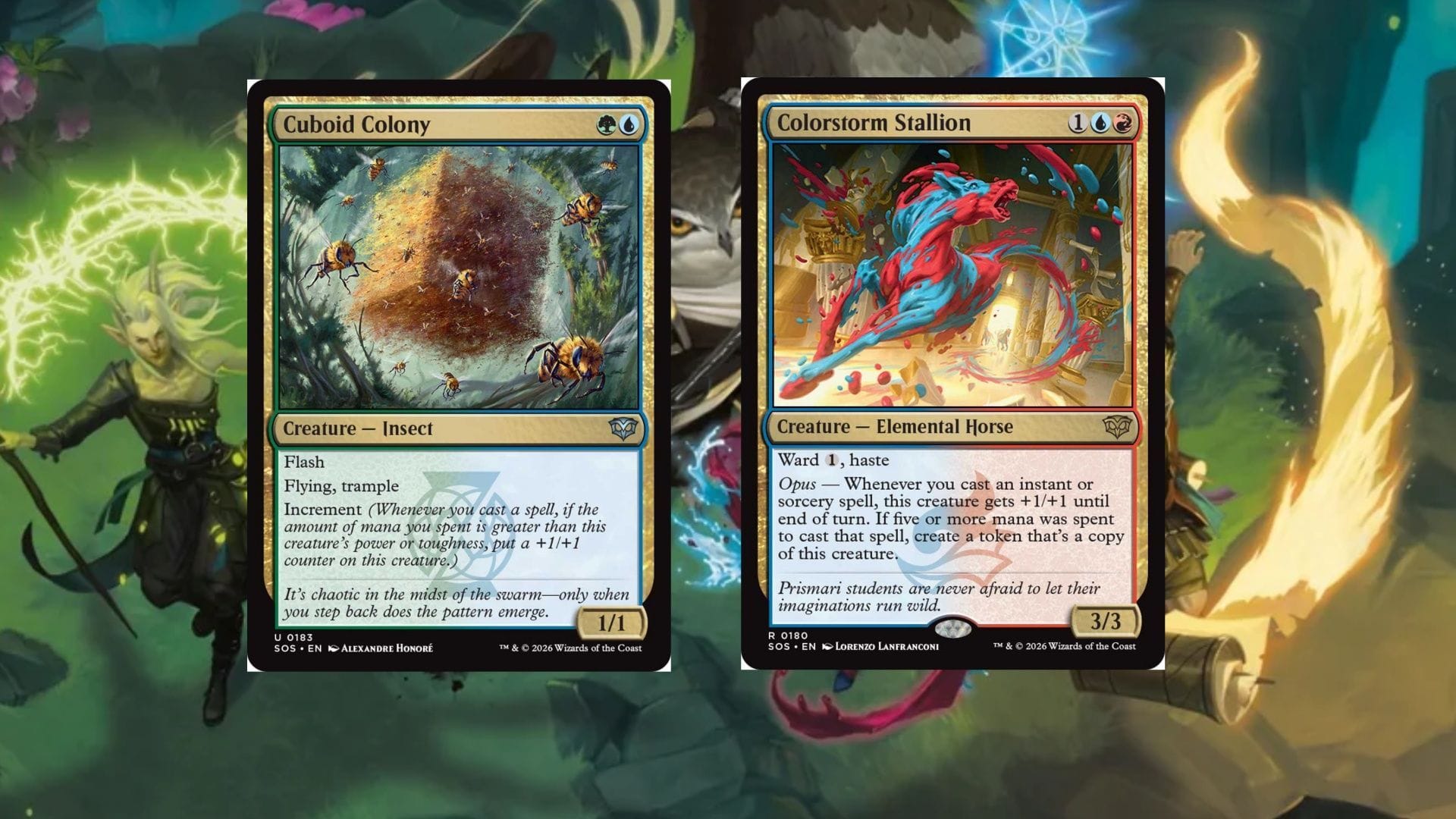
Increment is Quandrix’s mechanic, and it’s based on the power/toughness of a creature, versus the spells you’re casting. For example, Cuboid Colony is a 1/1 creature for 2, and anytime you cast a spell that has a higher mana value than either of the Cuboid Colony’s power or toughness, it receives a +1/+1 counter. Obviously, it will be harder to do this the longer the game goes on, but it’s an amazing way to get value out of your cards.
Opus is the Prismari school’s mechanic and rewards you for casting spells while the creature equipped with it is in play. Opus will give you an initial reward for casting a spell while the creature is out, for example, Colorstorm Stallion (+1/+1 counter). Then, if the spell you cast has 5 or more mana, you get another reward (make a copy of this creature). Big plays get rewarded in Prismari.
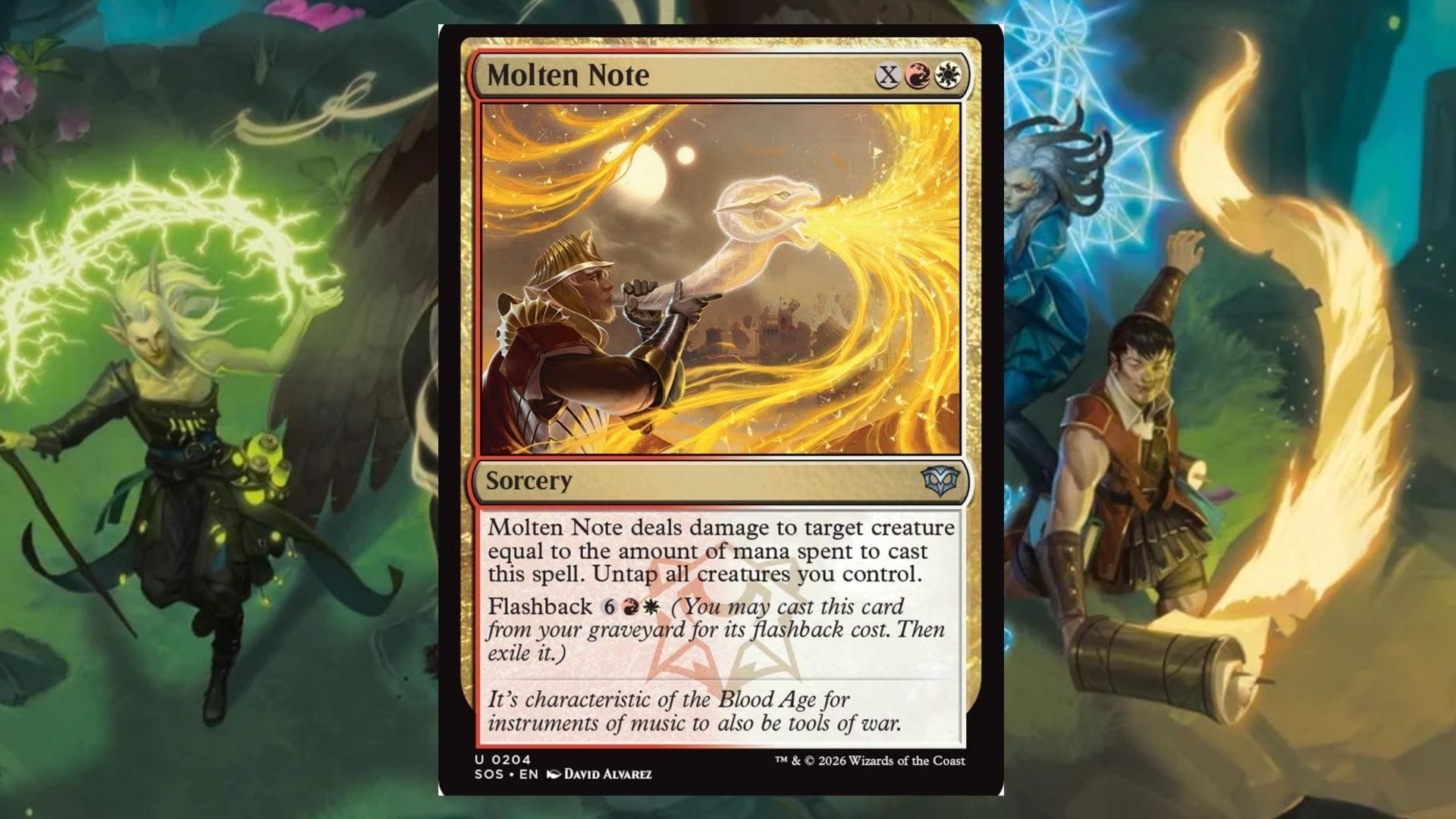
Flashback is Lorehold’s primary mechanic, and it’s one that most MTG players have seen before. Cards with Flashback can be cast again from the graveyard, for its Flashback cost. Then you exile that card, once it resolves, for better or worse. It’s primarily seen on Instants/Sorceries, like on Molten Note, which deals damage to target creature equal to the amount of mana spent to cast the spell. It also untaps your creatures, allowing for other shenanigans to take place.
There are of course, other keywords that will be used in MTG Secrets of Strixhaven, but these are the main, most important mechanics. There’s still lots to look forward to, such as spoilers for the main set, and of course, Commander decks.
Check out our other MTG guides and features
Are you stuck on today’s Wordle? Our Wordle Solver will help you find the answer.
Edited by Jason Parker