Politics
/
February 24, 2026
What’s a flopping demagogue to do? Lash out at his enemies, pretend he’s doing great, and bore us all into submission.
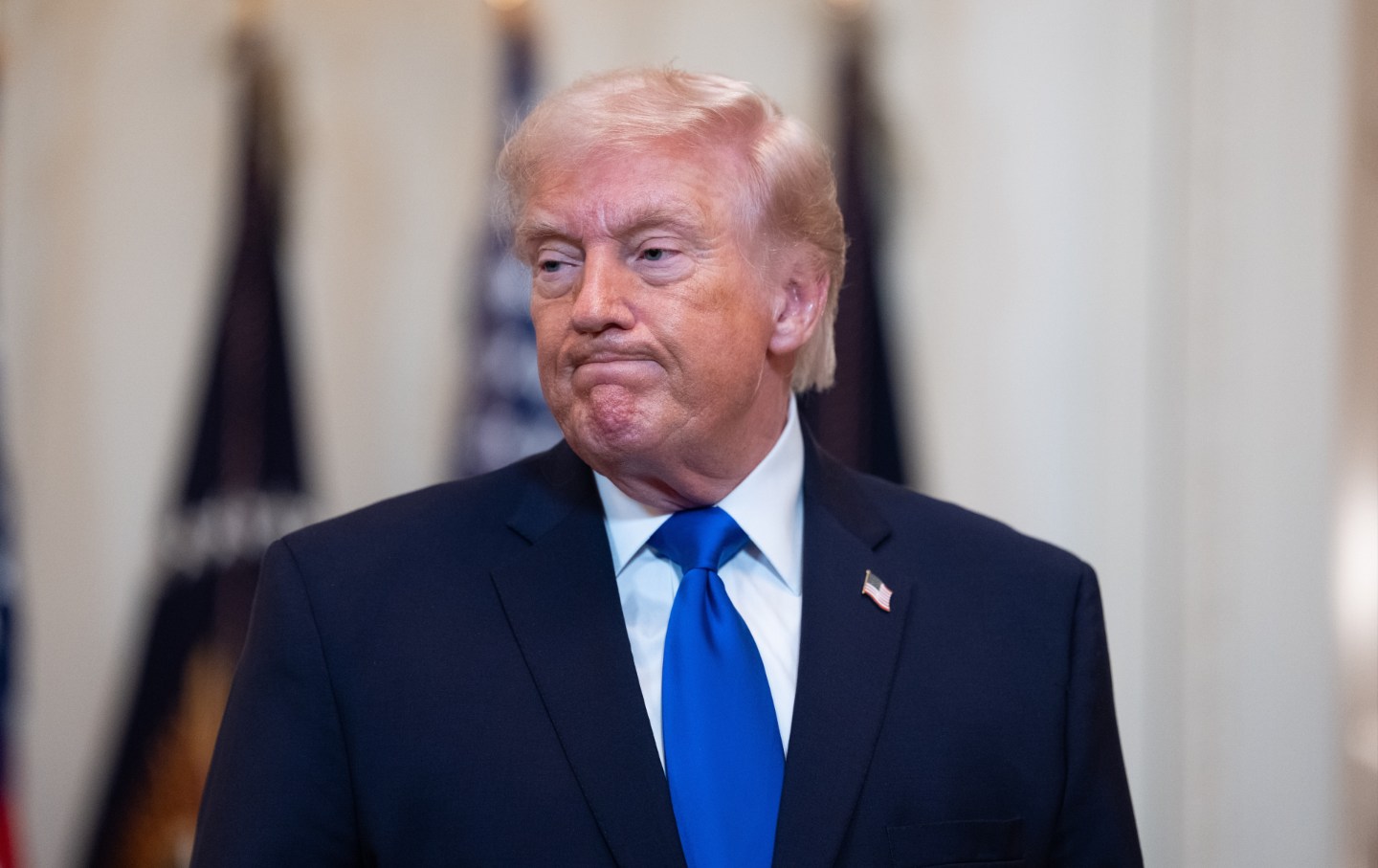
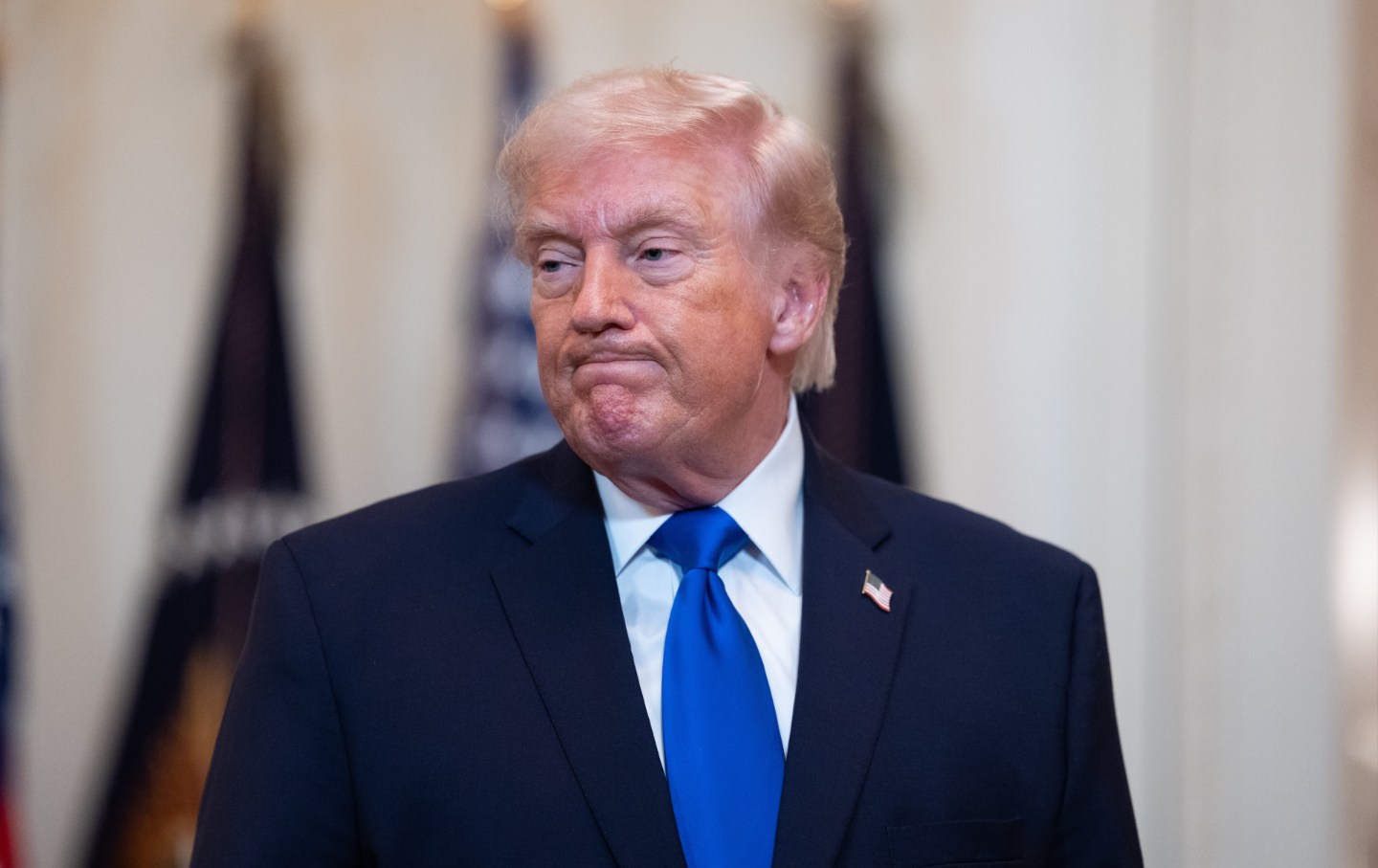
Donald Trump at the White House on February 23, 2026.
(Aaron Schwartz / CNP / Bloomberg via Getty Images)
Donald Trump’s State of the Union address tonight promises to be a tedious exercise in boasting about imaginary achievements and berating political foes. We know this for two reasons: first, because, no matter who is president, the State of the Union is practically by definition a tedious exercise in boasting about imaginary achievements and berating political foes; and second, because Trump is facing serious political setbacks and is responding to them by amping up his vainglorious self-celebration.
Trump gave his version of a sneak preview for the speech on Monday “So we have a country that’s now doing well,” he said at the White House. “We have the greatest economy we’ve ever had. We have the most activity we’ve ever had. I’m making a speech tomorrow night, and you’ll be hearing me say that. It’s going to be a long speech, because we have so much to talk about.”
Since Trump has never favored brevity, his foreshadowing of a “long speech” feels like a threat more than an enticement. Perhaps he’s hoping that droning on will lull the American people into forgetting that they really don’t like him.
Trump might feel like the economy is gangbusters, but that’s a minority position in the country. According to a Washington Post/ABC News/IPSOS poll released on Sunday, 57 percent of Americans disapprove of Trump’s handling of the economy, 64 percent his handling of tariffs, and 65 percent his handling of inflation.
Summing up this polling, the Post records a near-record level of public dissatisfaction:
Americans remain generally sour about his performance, with majorities disapproving of his handling of priority initiatives while saying he has overreached the authority of his office…
The president’s approval rating stands at 39 percent positive and 60 percent negative, including 47 percent who say they strongly disapprove.
Not to be outdone, CNN reports, “Among political independents, Trump’s approval rating has dropped 15 points over the past year to 26%, the lowest it’s been in either of his terms.” Trump has also suffered sharp declines among Latinos and young voters.
Current Issue

The polling tells a consistent story. Trump’s only robust support comes from the GOP base (though even this group’s approval is slowly trickling downward, going from 90 percent to 82 percent over the last year in the CNN poll). Among the rest of the population of Democrats and independents, Trump is as intensely disliked as any president has ever been. Mainstream culture has already rejected Trump. One telling example is the fact the women’s hockey team that won gold at the Olympics has turned down Trump’s invitation to join the audience at the SOTU address.
Added to these grim figures are the political defeats Trump has suffered recently. As USA Today notes:
President Donald Trump’s aggressive second-term agenda already was faltering when the Supreme Court delivered a hammer blow.
The court’s 6-3 decision released Feb. 20 invalidating Trump’s use of emergency powers to enact sweeping tariffs shattered a pillar of his economic agenda. It’s also the latest in a series of other setbacks, from his withdrawal of immigration agents in Minneapolis to his retreat on seizing Greenland.
These political headwinds have led to not just flagging poll numbers but GOP losses in the special elections. They bode ill for Republican prospects in the upcoming midterms.
A different president might respond to this by pushing a bland message of national unity. But Trump only ever has one move when cornered: dig in and lash out. So in addition to boasting about his achievements, Trump is likely to go on the offensive. In particular, he has in recent days been hitting hard on the theme of election fraud, advocating for stringent voter-ID requirements in his proposed SAVE America Act (which can pass only if Senate Republicans abolish the filibuster). Trump has also said that if the SAVE America Act doesn’t pass, he’ll use executive orders to make sure stricter voter-ID rules are followed in the midterms—something widely seen as outside his legal authority.
As in previous State of the Union addresses, Trump will showcase so-called “Angel Families” (those who have lost loved ones to crimes committed by undocumented immigrants). This will allow him to present the issue of immigration as a racialized melodrama of innocent Americans victimized by foreigners. His other usual punching bags—trans people, DEI, the media—might get a mention too. And it seems likely that he will boast about his turn towards neo-imperialism in the Western Hemisphere, threaten war with Iran, and pretend that he is pursuing peace in Gaza.
Trump’s combination of bragging about the economy and demonizing his foes will not help him get out of the political quagmire he is now in. Quite the opposite. This is a message that appeals only to the hardcore MAGA faithful. Trump will show his loyalists that he’s keeping to his hard-line right-wing policies, whether the rest of the country likes it or not. Whatever self-praise he offers himself, tonight’s speech will show that the true state of the union remains bleak.
More from The Nation

I’ve studied Czechoslovakia in 1968. I live in Minneapolis. The similarities between the historic invasion and the current ICE “surge” are scary.
Alice Lovejoy
The candidate may have started as a long-shot contender, but The Nation always took him—and his impact on political history—seriously.
Richard Kreitner
In this week’s Elie v. US, our justice correspondent explores how Trump’s State of the Union turned authoritarian violence into a titillating event. Plus Kansas’s vile ban on driv…
Elie Mystal
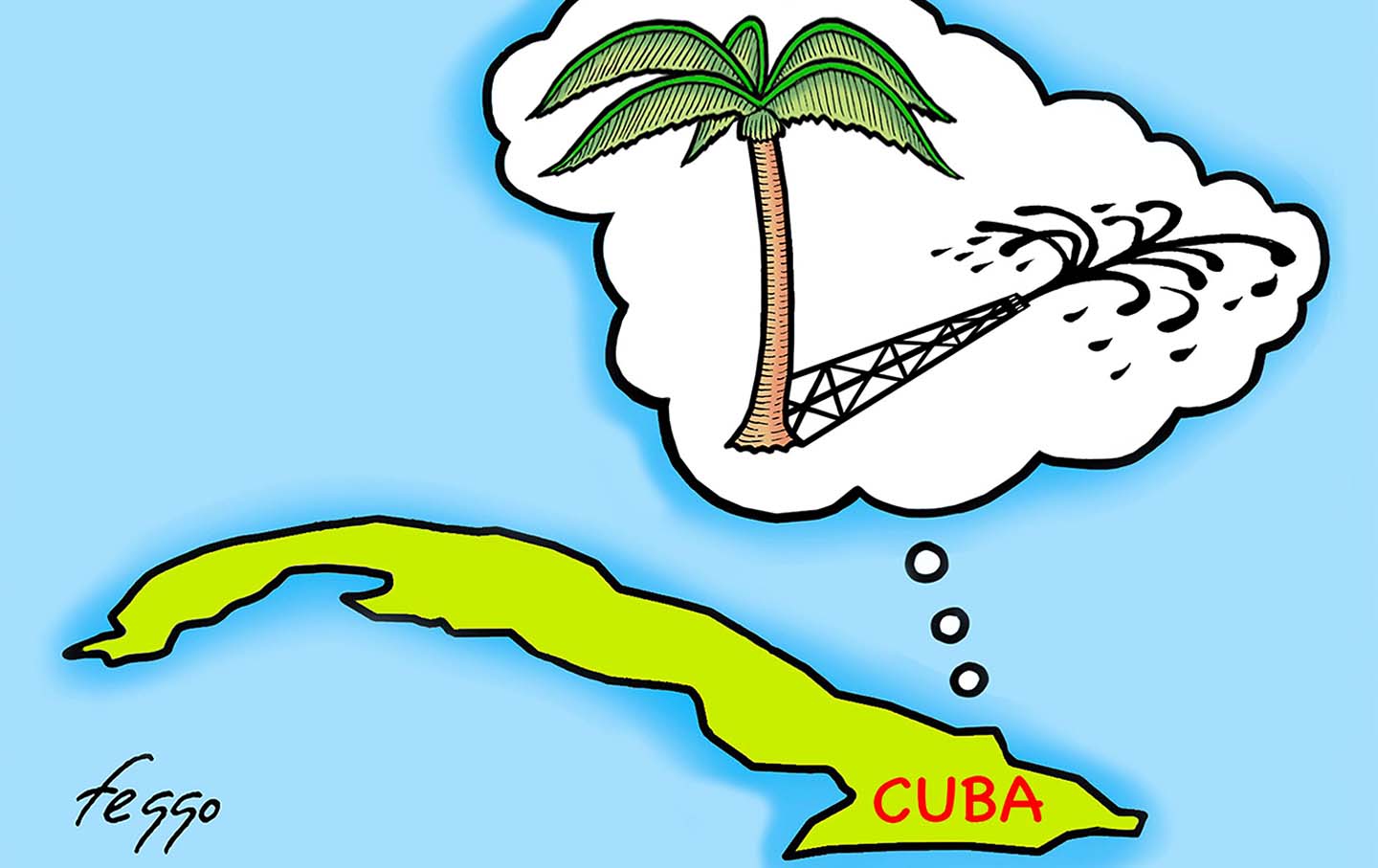
Much of Cuba goes dark as a US oil blockade chokes the island’s energy supply. Major carriers have halted services now that aviation fuel is no longer available at nine internation…
OppArt
/
Felipe Galindo
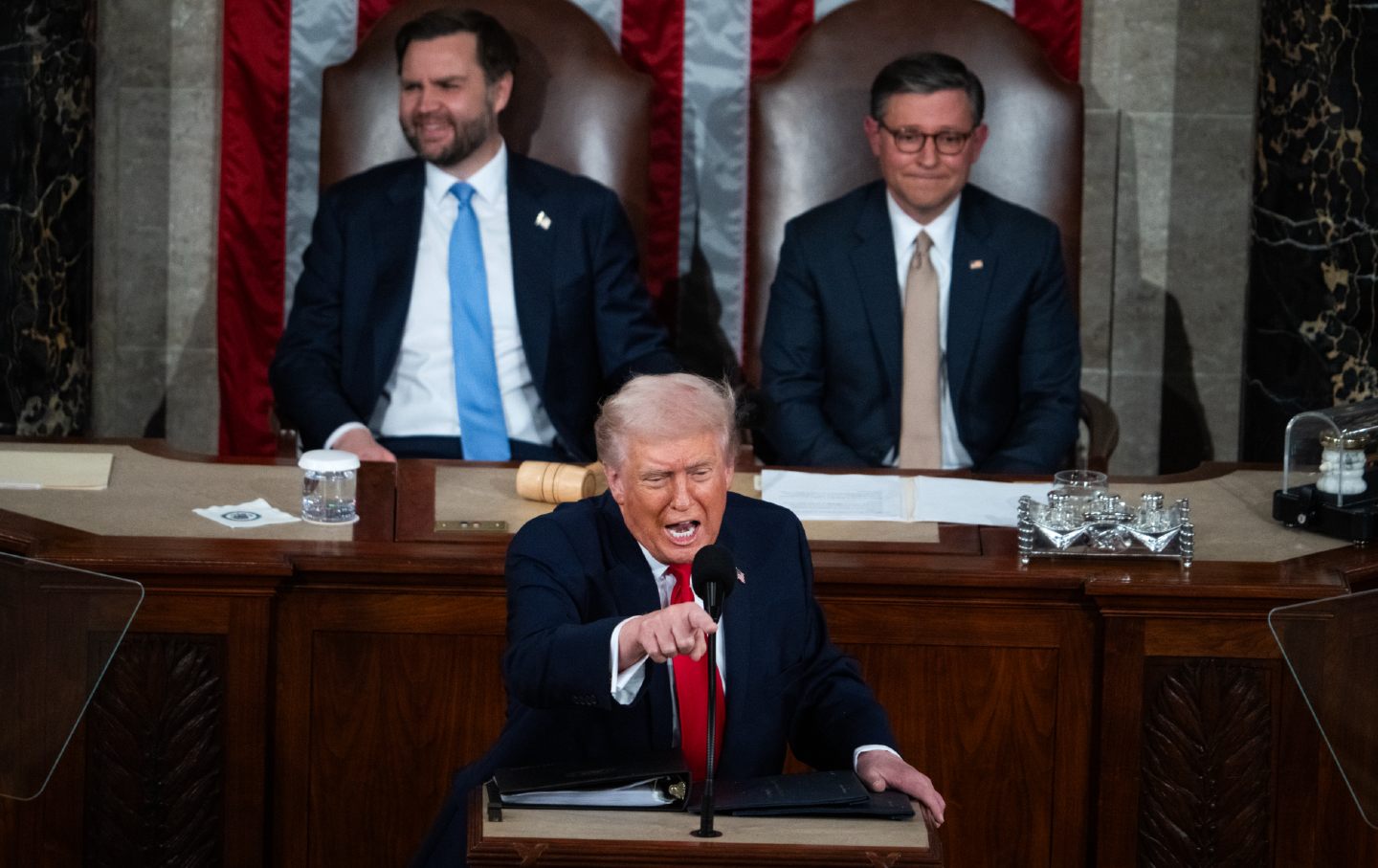
It was most mendacious State of the Union in US history. It was also the longest.
Column
/
Sasha Abramsky